How to collaborate better with your steering committee, advisory panel or other stakeholder engagement group.
Ask anyone managing a major project or program in any field, and they will tell you – stakeholder relationships can make or break your success. In the infrastructure industry alone, over $30 billion worth of projects in the past decade were cancelled or significantly delayed due to stakeholder pressure, according to research by the ANU’s Next Generation Engagement Program.
A stakeholder working group is often a key part of an organisation’s community engagement strategy during a large project. As a freelance facilitator I have facilitated or chaired many stakeholder working groups over the years and seen first-hand the effect that a stakeholder working group can have on a project.
When it’s functioning well, a stakeholder working group is a valuable source of wisdom, collective knowledge, goodwill and social licence necessary for the project to succeed.
When the group is not going well, it can derail not only project deadlines but also relationships. Disengaged members, unproductive meetings and unresolved conflict can all create a working group environment that’s frustrating for everyone involved.
Trust, ownership and collaboration are key to a building a successful working group, but how do you actually do it?
A few definitions of stakeholder working group:
A stakeholder working group group may also be known as a:
- steering committee
- advisory panel
- community reference group, or similar.
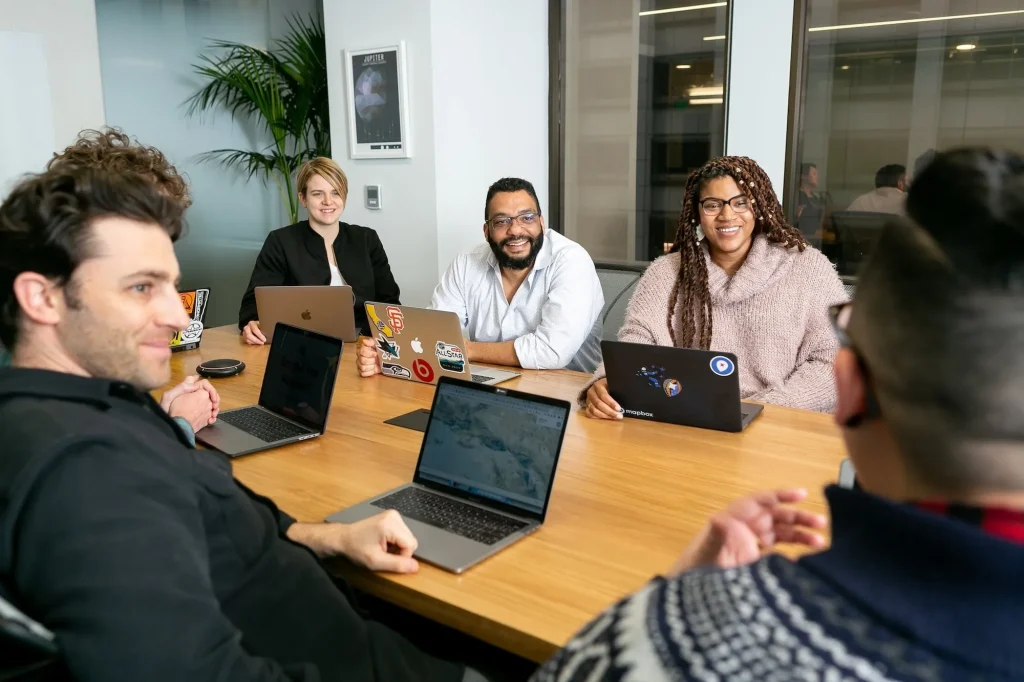
A stakeholder working group is made up of representatives from industries and community sectors who are going to be significantly affected by a project. The working group is usually created by the organisation who is delivering the project – we’ll call them the project team. They organise the meetings, share project updates, take the minutes, and report back on the actions at the next meeting.
It’s important that the project team considers themselves members of the working group too, bound by the same meeting rules and working towards a common goal.
Some stakeholder working groups are responsible for making decisions about where the project goes in future. Others are there to provide advice only, and decisions are made elsewhere.
No matter what type of stakeholder working group you have, you need to create trust, ownership and genuine collaboration between working group members. Here’s 3 ideas to try:
1. Involve ALL working group members in agenda items to build ownership.
Have a member presentation or check in at every meeting. This helps members get to know other members, including their interests in the project, and encourages them to feel as though this is their meeting as well. It can also lead to new collaborations beyond the working group. This will work best with clear guidelines for member presentations and effective facilitation from the Chair.
Turn members’ suggestions into action items that they are responsible for. How often have you reviewed the action items from a working group meeting and noticed that all of the actions are assigned to the project team, and no other members? It’s hard to feel a sense of ownership of a group if you don’t play much of an active role in it. If a member of the working group has an idea that could help the group, e.g. an introduction to a useful contact or some relevant research, ask them to follow it up and be the action officer. This will build their ownership and engagement in the group.
After presentations to the group, don’t ask the generic “Are there any questions?” Perhaps there are no questions but plenty of comments! Specifically invite these comments by asking targeted questions that open up discussion and feedback: “Any suggestions?” “Any surprises here?” “Any thoughts on how this might be received in your community?”
2. Answer difficult questions from working group members using validation.
Working group members will sometimes ask questions that are difficult to answer because the information is confidential, controversial, not within the scope of the project, or no one knows the answer.
Often in this situation, the project team will be in the hot seat. If they don’t answer difficult questions well, it can erode the goodwill and transparency in the group.
Validation can be a useful skill here. Validation is not necessarily agreeing with other person or giving them the answer they want to hear, but genuinely saying:
- I see where you’re coming from.
- I can see why you’d want to know that.
- Your question is important. It’s good that you asked it.
This could be accompanied by an offer to follow up with more information or some other action, but this is only going to be useful if the commitment is actually followed through.
Validation and follow-up are simple yet powerful tools for generating goodwill among working group members.
3. The minutes are more than just a record.
Meeting minutes aren’t just an admin task – they are the key to maintaining momentum. Circulating the minutes promptly maintains the sense of excitement and progress that built up during the meeting. Members also use the minutes to recall the key points of the meeting so they can share this information with the group they represent. If the minutes take too long to be sent out, members will find it hard to brief their communities, and may get a sense that meetings are just a talkfest with nothing actually happening.
Don’t overly sanitise members’ comments. Working group members will often share strong opinions – that’s what they’re there for! If spicy comments are made about politics, other organisations or other members, always try and reflect the speaker’s words as closely as possible in the minutes. There may be times when you need to tactfully reword or summarise things, but don’t change the intent of the original comment or leave it out altogether. Members need to see their input reflected in the minutes in order to feel a sense of ownership and trust in the working group.
Put a summary of actions at the start of the minutes, not at the end. This encourages busy members who miss a meeting to keep up to date – all they need to do is look at the first page of the minutes to see the key actions coming out of the meeting and get the gist of what happened, rather than having to read through the whole document. Stakeholder working groups can be powerful force for good in your community engagement strategy. These 3 tips will go a long way towards building members’ trust in one another and their sense of ownership of the working group.
Do you belong to a stakeholder working group that could use some help? Book a free 30 min call with Renée.
Read more about Renée’s experience with stakeholder reference groups and workshops.
Like this blog? Subscribe here to be notified about articles like this one.